The Death of the Data Monolith: An Introduction to Data Mesh
Table of Contents
The People Problem of Data Platforms
In my previous post, I discussed how the Lakehouse architecture addresses the technical gaps between Data Lakes and Warehouses. But even with state-of-the-art components, will we automatically have a successful data platform? OF COURSE NOT!
Engineering is easy compared to people. Who is responsible for which part? How does the organization scale as the business scales? These are critical questions an architect must answer before the wrong structure defines the architecture for them (the Conway’s Law reverse maneuver).
“No matter what the problem is, it’s a people problem.” — Gerald Weinberg
In her groundbreaking article, How to Move Beyond a Monolithic Data Lake to a Distributed Data Mesh, Zhamak Dehghani diagnoses the root cause. Her thesis is confronting: while our technology has scaled, our organizational architecture has failed to keep up.
We have successfully moved to microservices for our applications, applying Domain-Driven Design (DDD) to create bounded contexts. Yet, ironically, for our data, we have created the biggest monolith of them all: a Domain Agnostic Data Platform 💩.
The Three Generations of Data Platforms
To understand where we are, we need to look at the trajectory of data platforms:
- Generation 1 (Data Warehouse): The proprietary, on-premise era. Highly structured, high integrity, but expensive and slow to change.
- Generation 2 (Data Lake): The Hadoop ecosystem. We focused on storing raw data cheaply, often creating “swamps.”
- Generation 3 (Cloud Native Streaming): The current state. We moved from Lambda to Kappa Architecture, embracing cloud-managed storage and real-time streams.
The Critical Observation: Generation 3 is “Technologically Modern, but Architecturally Archaic.” It solves the technical scaling problem (storage/compute) but fails at the organizational scaling problem.
Why Centralized Architectures Are Failing
Despite our modern tech stacks, our high-level architecture remains centralized.
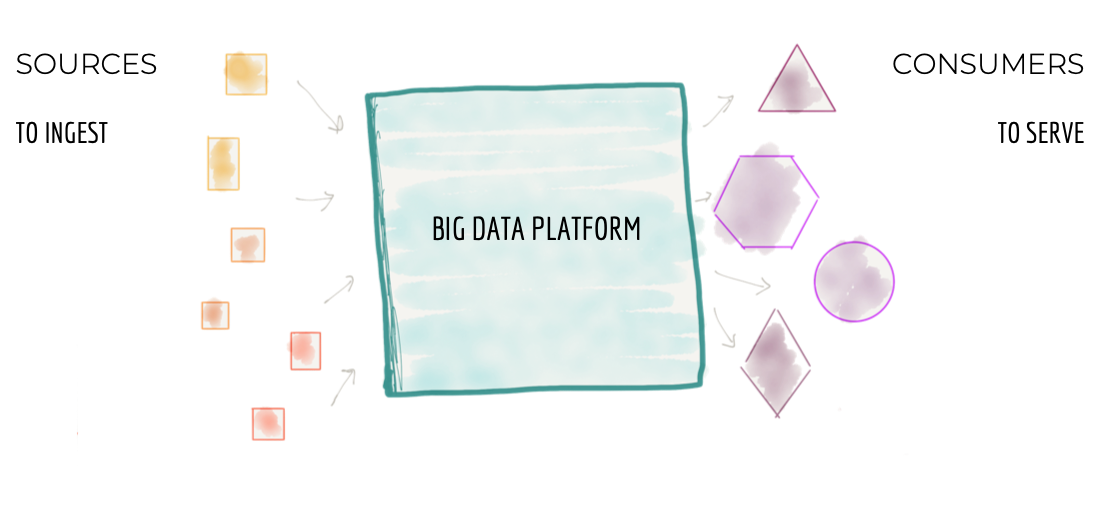
If we overlay Domains and Bounded Contexts onto this architecture, the friction becomes visible. We have successfully applied DDD to our microservices, but we created a monolith for our data.
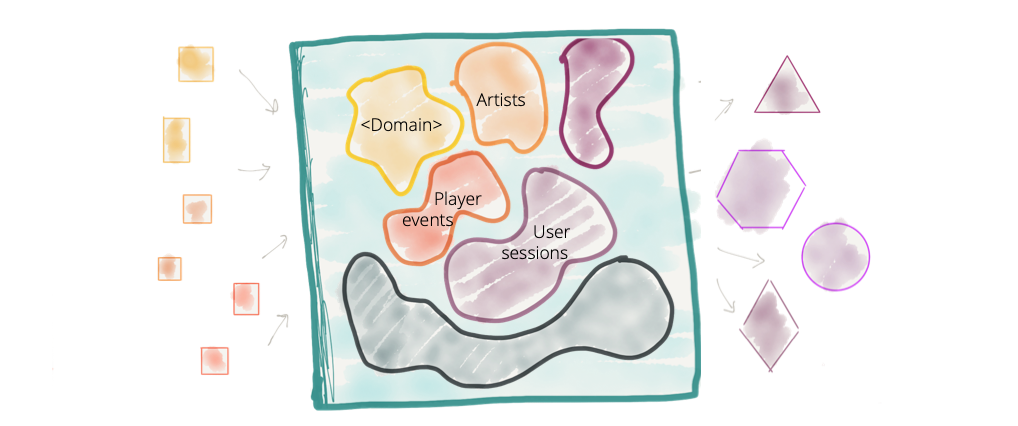
This centralized model forces all data to flow through a single “Data Platform Team.” This creates three specific failure modes that inhibit innovation:
1. The Monolithic Bottleneck
We funnel data from every domain (Sales, Logistics, Users) into one central team. As business complexity grows, this central team cannot scale to understand the nuances of every source domain. They become the bottleneck for every new report or projection.
2. Coupled Pipeline Decomposition
We typically split data teams by technical function: Ingest $\rightarrow$ Process $\rightarrow$ Serve.
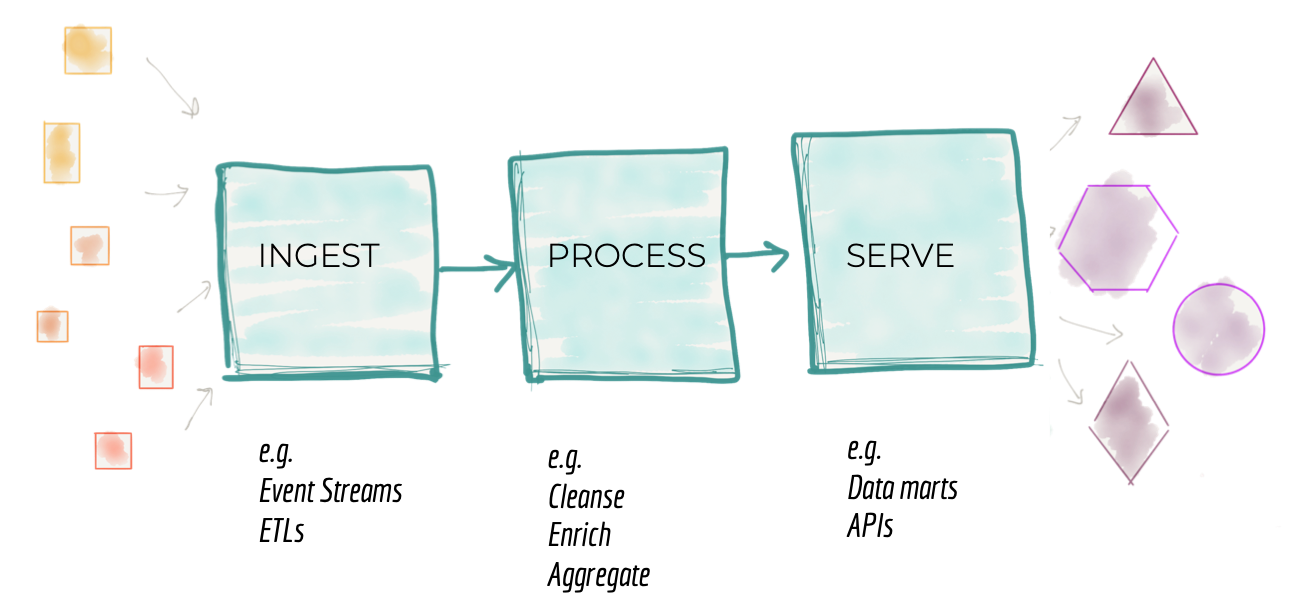
The architectural flaw here is that this decomposition is orthogonal to the axis of change. When a business feature changes, it usually requires changes in Ingestion, Processing, and Serving simultaneously. Because these stages are owned by different teams, a single feature request requires expensive coordination and results in slow delivery.
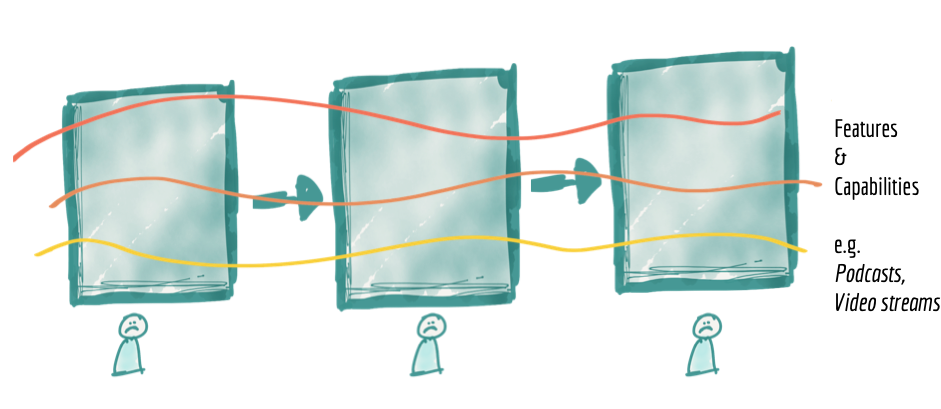
3. Siloed Ownership (The Incentive Trap)
The architecture creates a disconnect in ownership and incentives.
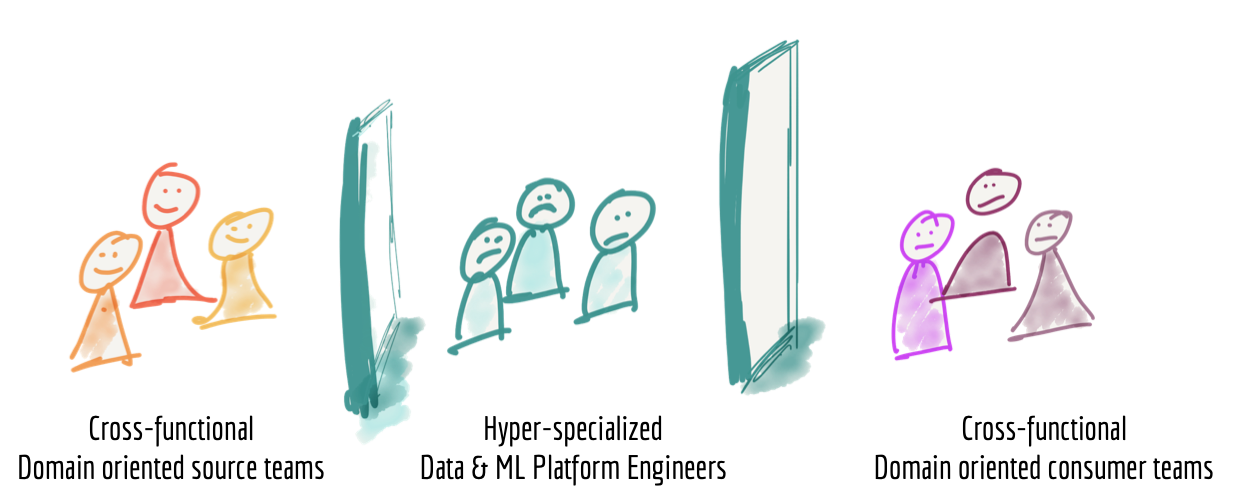
- Source Teams treat data as “exhaust.” They are incentivized on uptime, not data quality.
- Data Engineers are hyper-specialized in tools (Spark/Kafka) but lack domain context. They are forced to “clean” data they don’t understand.
- Consumers are frustrated by low quality but are disconnected from the source.
The Solution: Data Mesh
The solution isn’t just “better tech”; it is a sociotechnical shift. The Data Mesh is a convergence of three industry trends applied to data:
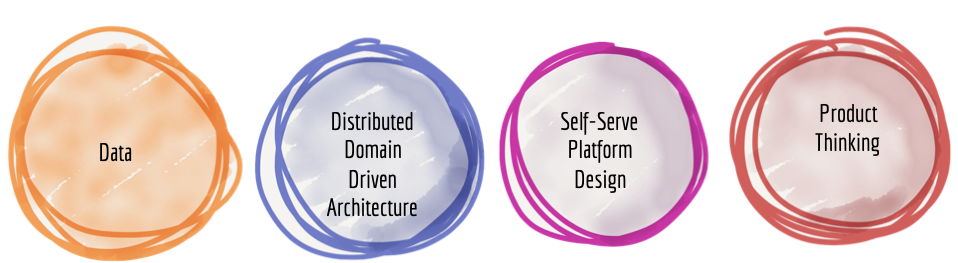
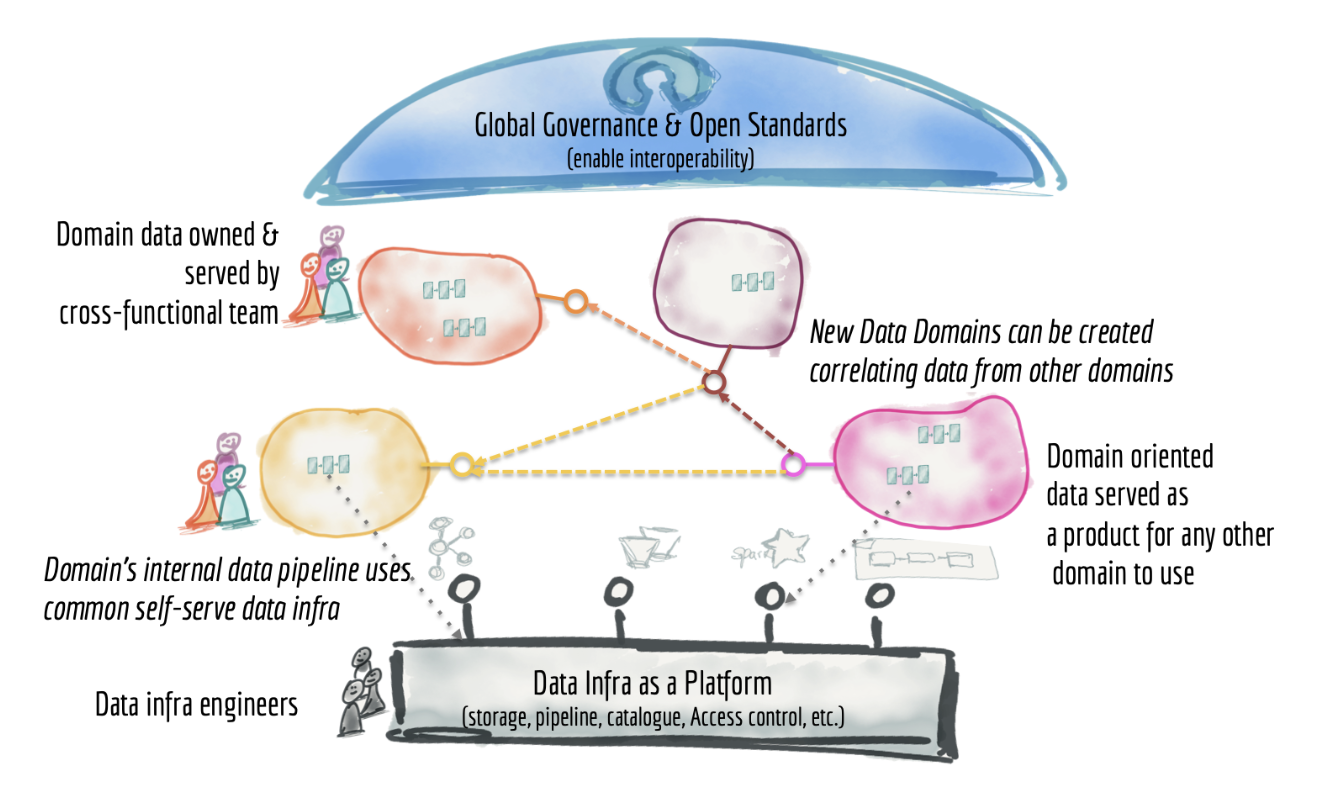
It relies on four governing principles to decentralize data ownership.
Principle 1: Domain-Oriented Ownership (Distributed DDD)
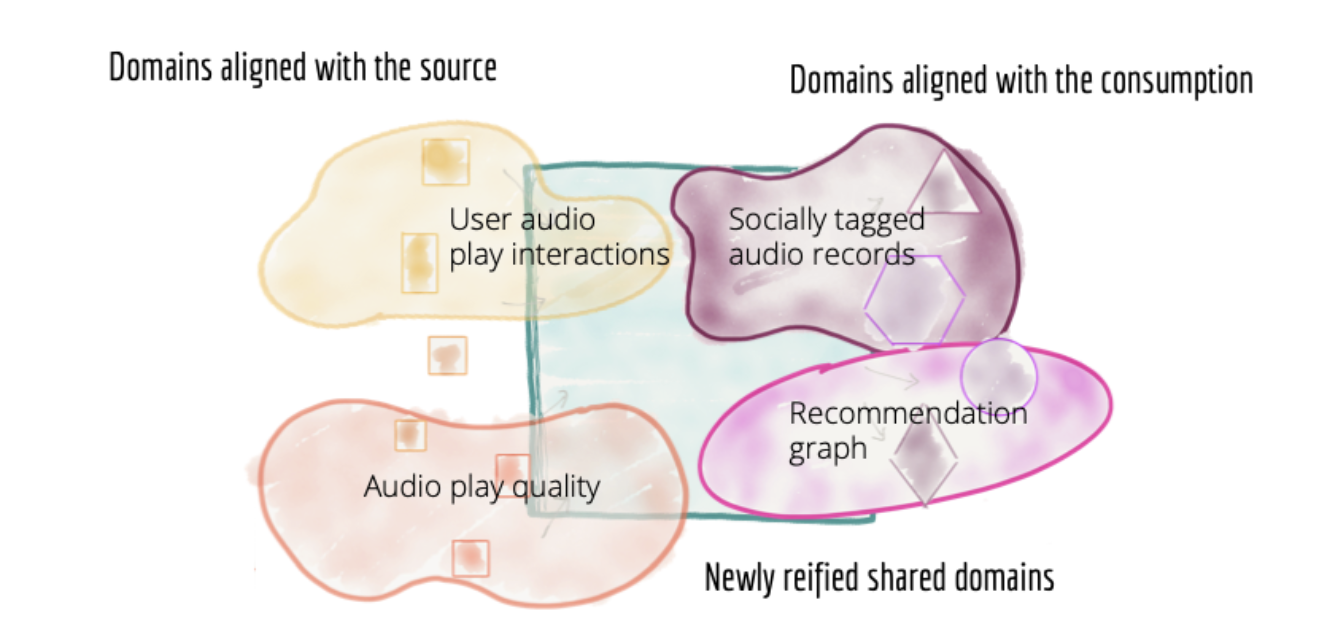
We must move from a Centralized to a Federated model. Instead of extracting data from domains and pushing it to a central lake, domains should host and serve their own datasets.
The team that owns the “Checkout Service” should also own the “Checkout Events” analytical data. The ETL pipeline becomes an internal implementation detail of the domain, not a central function.
Principle 2: Product Thinking (Data as a Product)
This fixes the incentive trap. Source teams must stop treating data as a byproduct (passive asset) and start treating it as a Product (active service).
- The Customer: Data Scientists and other domains.
- The Metric: Not just uptime, but usability and delight.
To be a product, data must be Discoverable, Addressable, Trustworthy, Self-Describing, Interoperable, and Secure (DATSIS).
Principle 3: Self-Serve Platform Design
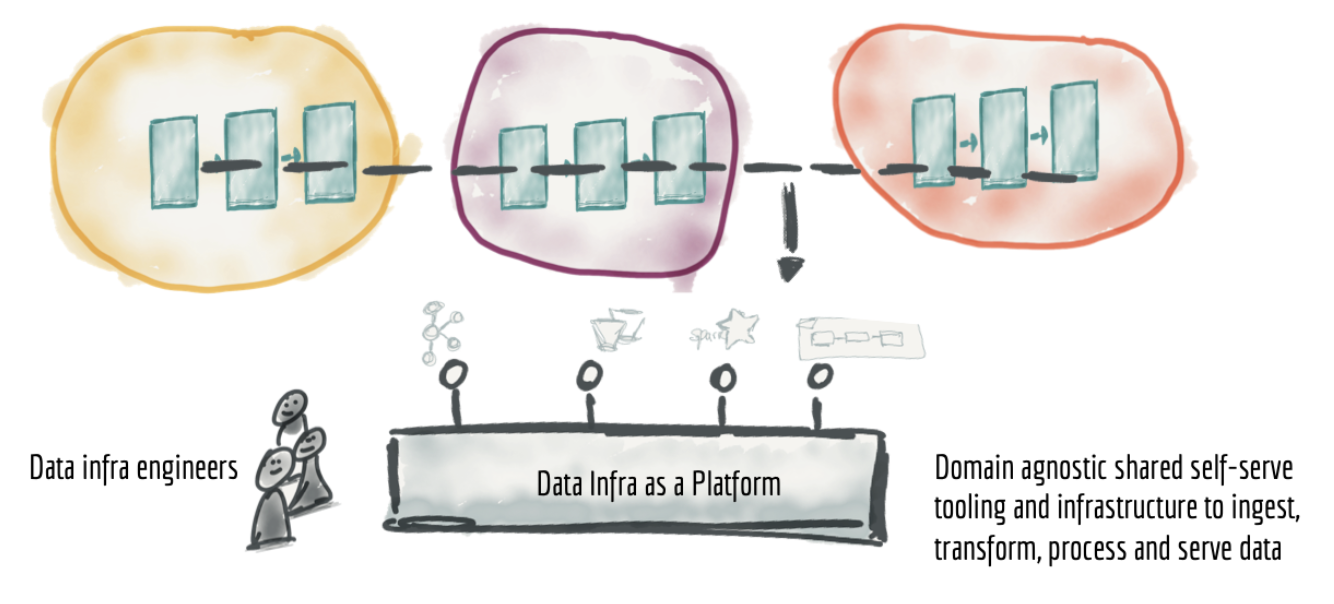
If every domain team has to build their own ETL pipeline, we will drown in duplication. The Platform Team’s role shifts from “doing the work for you” to “building the tools so you can do it yourself.” They provide a high-level abstraction (storage, cataloging, access control) so domain teams can publish data products without becoming infrastructure experts.
Principle 4: Federated Governance (The Glue)
How do we prevent chaos? Through Federated Computational Governance. Instead of a central bureaucracy, a guild of Domain Representatives and Platform Engineers decides on global standards (like security policies and identity management). These policies are then automated by the platform (“Policy as Code”).
Conclusion
The Data Mesh challenges us to stop treating data as a technological problem and start treating it as an organizational one. By aligning our data architecture with our business domains, we can finally unclog the bottleneck and scale data utility across the enterprise.
The Data Lake doesn’t disappear, but it is demoted from “The Architecture” to just a technical implementation detail within the domains.
comments powered by Disqus